Solana now charges 1 SOL to file a bug report as AI spam piles up
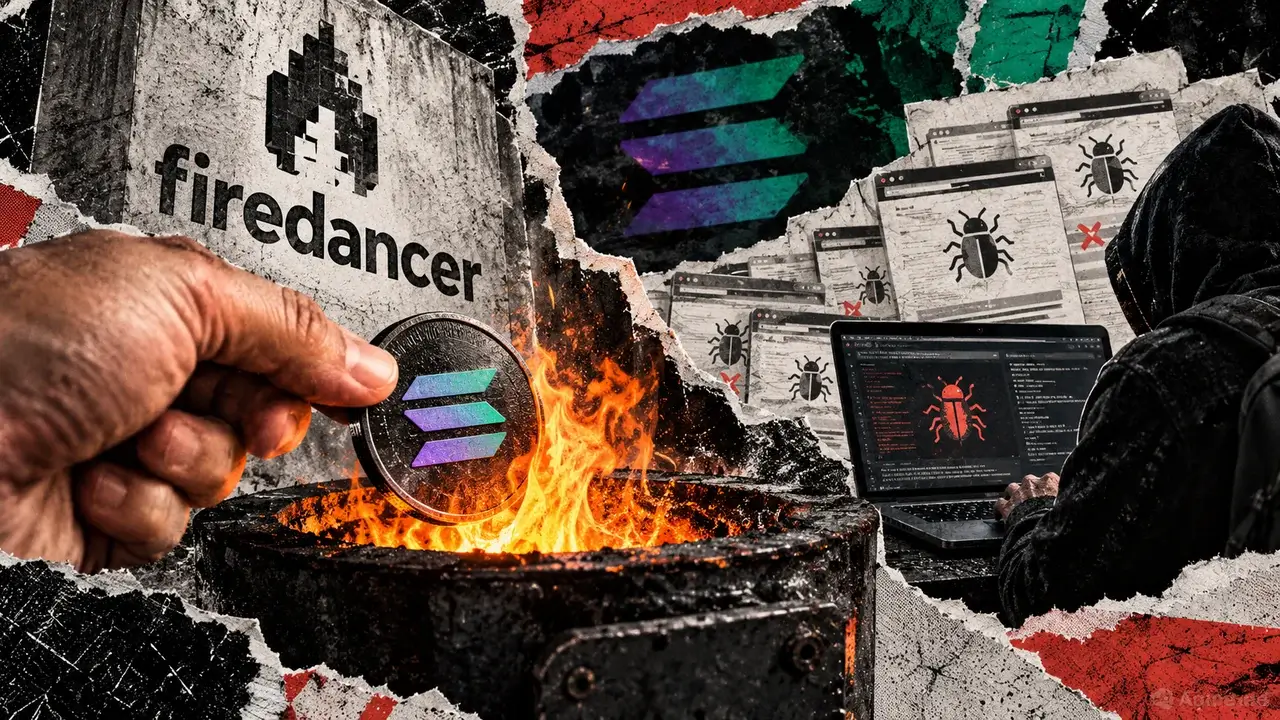
After a monthlong contest drew 809 submissions, Solana's security process now requires researchers to permanently burn 1 SOL per report.
Advertising disclosure: we may earn a commission when you join an operator via links on this page, at no cost to you. This never dictates our ratings. How we make money

Key takeaways
- Researchers must now burn 1 SOL, permanently, for every bug report they submit.
- A monthlong contest pulled in 809 reports.
- AI is believed to have helped generate or write nearly all of them.
- The fee is meant to deter low-effort, mass-produced submissions.
Solana wants researchers to put money behind their bug reports. Every submission now requires permanently burning 1 SOL. The change follows a monthlong contest that drew 809 reports.
What happened
The contest was meant to surface real vulnerabilities. What it produced was a flood. CoinDesk reports that AI is believed to have helped generate or write nearly all of the 809 submissions. How many of them, if any, were valid findings? The source material doesn't say.
The response is blunt. Burned SOL is gone for good. It isn't a deposit, and nothing in the facts we have mentions a refund for reports that turn out to be good.
The logic of the fee
Spam is cheap when a language model can write a plausible-looking vulnerability report in seconds. A price changes the math. If you're confident you've found something real, 1 SOL is a small cost. If you're firing off hundreds of speculative reports, it adds up fast.
Security teams only have so many hours. A junk report that looks credible still has to be read, tested and closed. That's the real cost being pushed back onto the sender.
Why it matters
For SOL holders, the direct impact is tiny. Each burned token trims supply by a hair, nothing more. The bigger issue is security. Bug reporting is a core defense for any chain, and if triage gets buried under AI noise, real flaws could wait longer for attention.
The fix carries its own risk, though. A paywall could put off honest researchers, especially students or people in lower-income regions who've found something genuine. Will other networks with open bounty programs copy the idea, or find a filter that doesn't charge the good guys?
Source: CoinDesk
Top Crypto Casinos Right Now
🇺🇸 Showing sites that accept players from United States Change country
Advertising disclosure: we may earn a commission when you join an operator via links on this page, at no cost to you. This never dictates our ratings. How we make money

More info Less info
Why we chose it: A US-facing book that pays a premium for crypto deposits: 125% against 100% for cash, with fee-free deposits across five coins.
- Payout time
- Within 24 hours (crypto)
- KYC
- Required
Restricted countries: Australia, Afghanistan, Bulgaria, Central African Republic, Congo - Brazzaville, Eritrea, France, Guinea-Bissau and 16 more.
More info Less info
Why we chose it: BetNow's casino floor with the biggest match bonus we list. The 200% headline deserves a careful read of the code terms behind it.
- Payout time
- Within 24 hours (crypto)
- KYC
- Required
Restricted countries: Australia, Afghanistan, Bulgaria, Central African Republic, Congo - Brazzaville, Eritrea, France, Guinea-Bissau and 16 more.

More info Less info
Why we chose it: A US-oriented casino that turns away only New Jersey. The cashier takes crypto, but the site publishes fewer specifics than any operator we list.
- KYC
- Required
Restricted countries: New Jersey (US).
Mia Chen
Mia digs into DeFi and on-chain data, translating protocol mechanics into plain English for everyday readers.