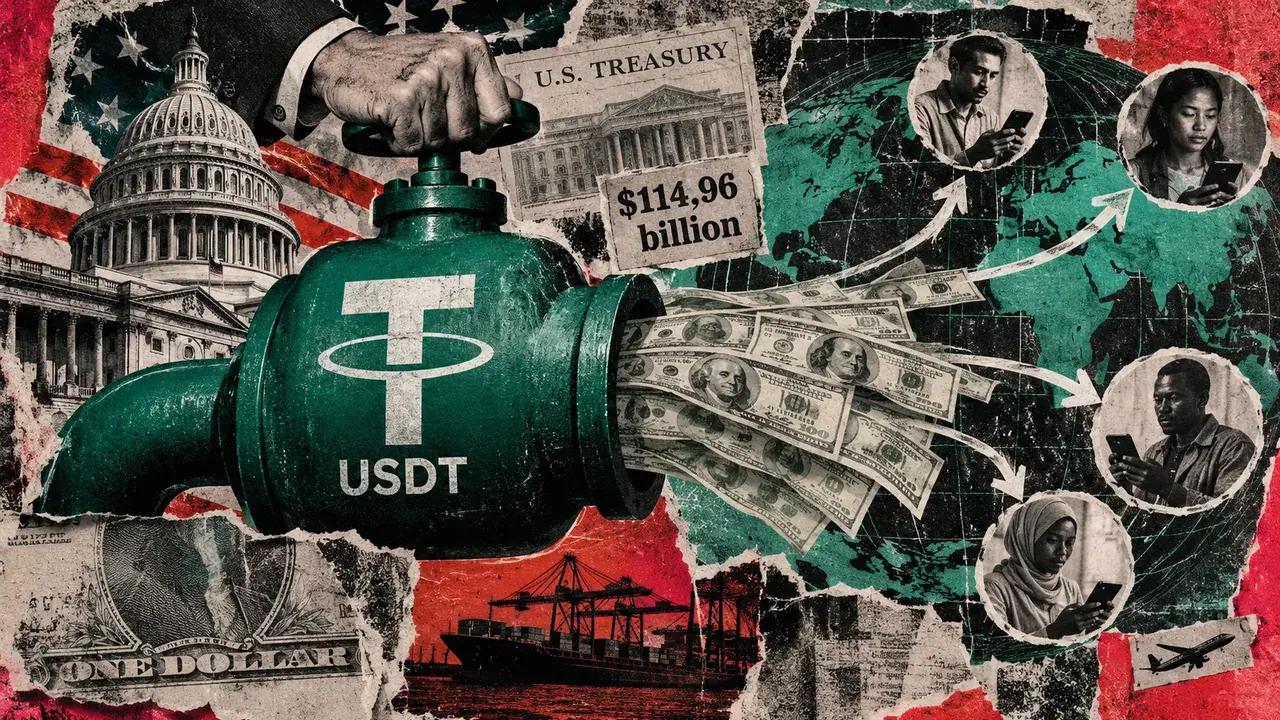
How Stablecoins Keep Their $1 Peg: Reserves and Arbitrage
Behind every dollar-pegged stablecoin lies a relentless mix of backed reserves and aggressive market arbitrage.
Advertising disclosure: we may earn a commission when you join an operator via links on this page, at no cost to you. This never dictates our ratings. How we make money
Key takeaways
- Most stablecoins target a fixed 1:1 peg with the U.S. dollar.
- Collateral and bank reserves give stablecoins their fundamental floor value.
- Arbitrage traders exploit price deviations to push off-peg tokens back to $1.00.
- Peg stability is critical for traders and casino players using stablecoins as cash equivalents.
Stablecoins promise a simple deal: one token equals one U.S. dollar. Maintaining that steady $1.00 price tag isn't magic, though. It's a mechanical engine driven by hard collateral and opportunistic traders.
Reserves build the baseline
A token can't hold a peg without real value under the hood. Most issuers back their tokens with reserves, holding cash, short-term bank deposits, or government debt securities in segregated accounts. Stash $1 in real-world assets for every token on the blockchain, and you get a hard value floor. Other models use crypto assets as collateral instead—usually over-collateralizing to absorb sudden price crashes.
Arbitrage fixes market drifts
Stablecoins trade constantly across exchanges, so price swings happen. That's where arbitrage traders take over. They act as the automatic immune system of the market.
Here's the play. High demand pushes a stablecoin up to $1.02 on an exchange? Traders buy fresh tokens straight from the issuer at $1.00 and immediately sell them on the open market for $1.02. That extra supply knocks the price right back to $1.00. If the price slips to $0.98, traders buy those cheap tokens on the exchange and redeem them directly with the issuer for $1.00 in cash. That buying pressure pulls the market price back up.
Why it matters
If you trade on exchanges or play at crypto casinos, stablecoins are your safe harbor. You use USDT or USDC to lock in profits, dodge volatile swings, and move bankrolls instantly. But a stablecoin is only as safe as its peg mechanism. When arbitrage fails or collateral comes into question, that dollar promise breaks—putting your deposited bankroll directly at risk.
Source: The Block
Top Crypto Casinos Right Now
🇺🇸 Showing sites that accept players from United States Change country
Advertising disclosure: we may earn a commission when you join an operator via links on this page, at no cost to you. This never dictates our ratings. How we make money

More info Less info
Why we chose it: A US-facing book that pays a premium for crypto deposits: 125% against 100% for cash, with fee-free deposits across five coins.
- Payout time
- Within 24 hours (crypto)
- KYC
- Required
Restricted countries: Australia, Afghanistan, Bulgaria, Central African Republic, Congo - Brazzaville, Eritrea, France, Guinea-Bissau and 16 more.
More info Less info
Why we chose it: BetNow's casino floor with the biggest match bonus we list. The 200% headline deserves a careful read of the code terms behind it.
- Payout time
- Within 24 hours (crypto)
- KYC
- Required
Restricted countries: Australia, Afghanistan, Bulgaria, Central African Republic, Congo - Brazzaville, Eritrea, France, Guinea-Bissau and 16 more.

More info Less info
Why we chose it: A US-oriented casino that turns away only New Jersey. The cashier takes crypto, but the site publishes fewer specifics than any operator we list.
- KYC
- Required
Restricted countries: New Jersey (US).
Alex Rivera
Alex covers crypto markets and trading, testing every platform hands-on before writing about it.